


Sudoku medium free is an old 18th century game where it is inspired by a game called the Latin Square. Since then, it has become one of the most popular games on the planet, amassing over 30 million players per day. People are interested in the puzzle elements of this game, as well as the easy way to pass time while playing.
However, the Sudoku medium free puzzle is often found difficult to solve. You can therefore consider applying more advanced strategies to avoid these difficult situations and solving more puzzles. On that paper, today’s article will focus on the strategy of the sudoku swordfish. This is one of the most widely used articles by Sudoku experts.
Understand the swordfish
The sudoku swordfish is a complex method of defining patterns to eliminate where a figure is located on the grid. You focus. one Number of times with this method, and the goal is to look for the following:
- 3 rows or 3 columns where the figure fits only 2 or 3 cells
- Each one in row/column must connect with another row/column
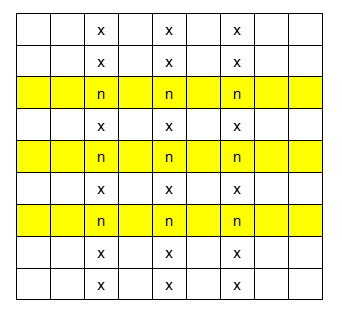
n = possible number
If the descriptions sound confusing, then hopefully, this chart will make it easier to understand. The rows are marked, the numbers that you focus on, can only appear three places in each row. As you can see, the same number can only appear in three of the binding columns.
This creates basic swordfish samples, but it can easily display anywhere on the network when you have three rows or columns where a number can only fit to 2 or 3 cells, and row/column is connected.
Recognize the Patterns of Swordfish
Remember this is an advanced strategy, so it’s definitely going to be complicated. The key is to learn to identify the swordfish, which can be done by following the following principles:
- Find three rows or columns – Pay attention to whatever three rows you have chosen Only appears in two or three cells.
- Find Sorting – When working on the line, the cells that contain your number must align with Exactly. Three columns. If you find a sample using the column, then each number must align with exactly three rows.
In other words, find three rows/columns with your index number, and then see if these numbers are lined up over the column/ row. The more you do, the more it starts to make sense, and you notice models.
Applying Swordfish Strategy
Let us consider some practical applications of this strategy in a sudoku puzzle. Here’s a screenshot from Sudoku.com that does a great job of visual representation of how to find this model, what it looks like, and what it means for your game.
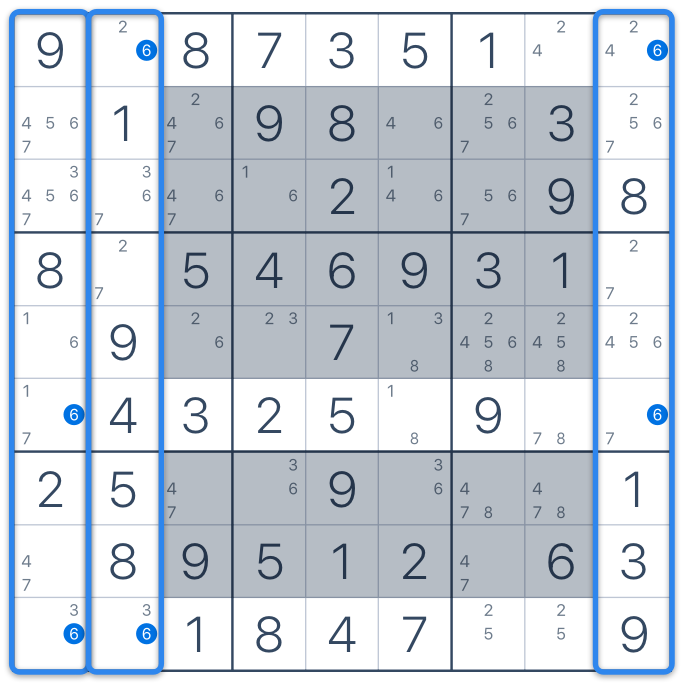
To explain this, the number that we focus on is 6. In the first picture, you’ll see that the player only realizes that these six people only appear two times in the first row, sixth and ninth lines — and all of these rows can be ranked into three columns.
In contrast, this means that the 6 can only appear in one of the two shapes:
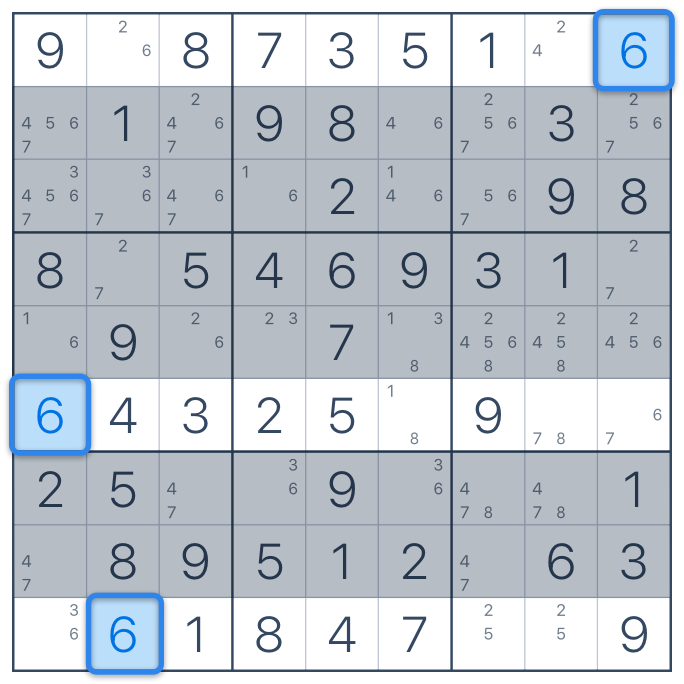
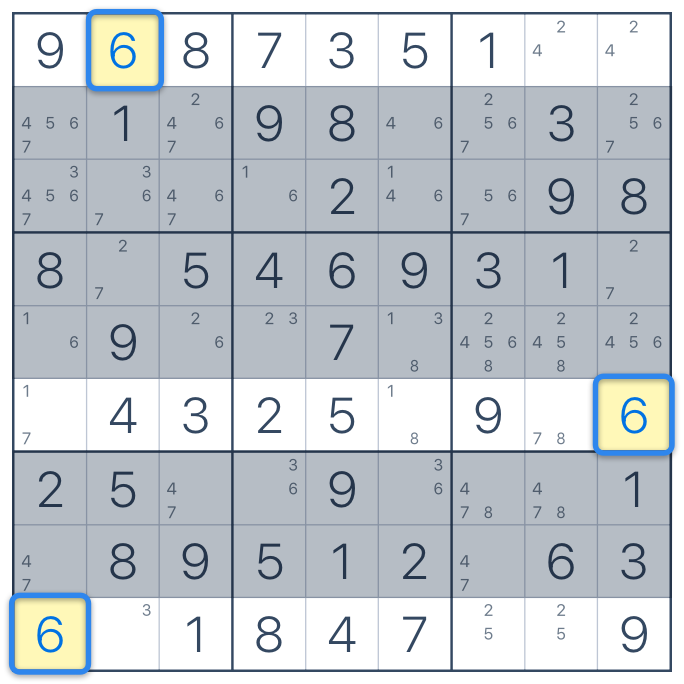
So you can go around three columns in the swordfish and remove any other note that you think some six can go, as the last figure shows:
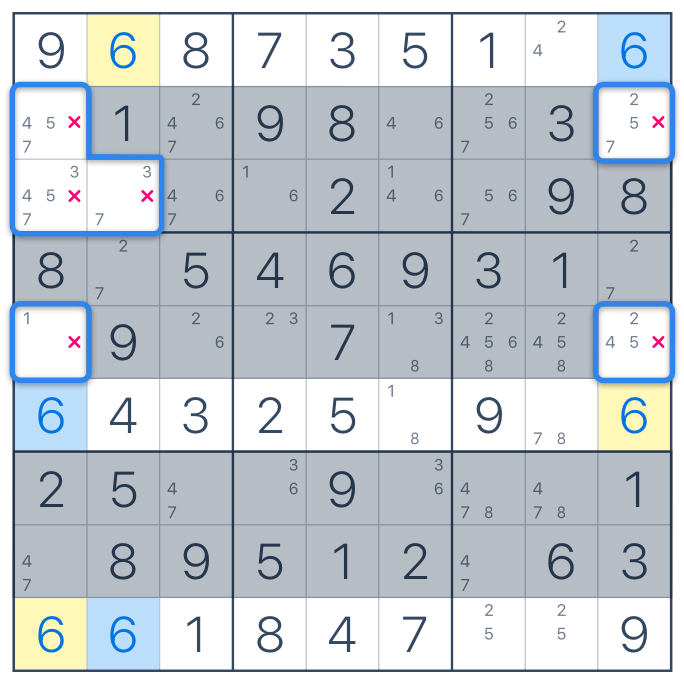
You only have six places left to go instead of twelve!
Common Errors to Avoid
The biggest mistake to avoid is to think each The riddle and the network will have a sample of the swordfish.
It’s a rare thing, and if you use simple or medium puzzles at 2447Sudoku then you’ll never need fishing techniques. Only for the most difficult, and even then, you may not find one. So do not be upset if you do not know!
The second mistake is to remove all your notes on the network for the given number. A swordfish helps you set possible positions for a number in a row number or column that forms part of the template. You’ll see in the above case, we don’t underline the captions of six non-cellular or part cell.
Better Choices for Swordfish
Basically, the swordfishing method is one of the worst methods in Sussex because it rarely occurs. If you can’t find the right pattern and always be a cell apart, then it’s better to apply common strategies such as:
- X Wave
- Text Y
Both of these help you to be more flexible and freer, and you will likely recognize patterns for each greater puzzle.
How to train the tactics of the fake swordfish
The best way to practice this strategy is to put up some of Sudoku’s games. You can do this at 2447Sudoku, although we suggest that you set the challenge to “widen out.
From there, start your game and create notes to work where the numbers can go. Fill the entire network with notes before finding a swordfish. Take the steps mentioned above to identify where fish can be found. It’s better to start with finding three rows that you choose to make two or three. See if these cells line up. If so, you have found a swordfish and can now work to remove some other markings from the grid.
When properly used, the swordfish’s strategy can enhance your puzzle solving skills and help you remove a lot of potential on the network. Don’t forget that this is important. Advanced The method – if you’re trying to solve it easily, on average or some sudoku puzzle hard, then maybe it’s not the best way to try it!